
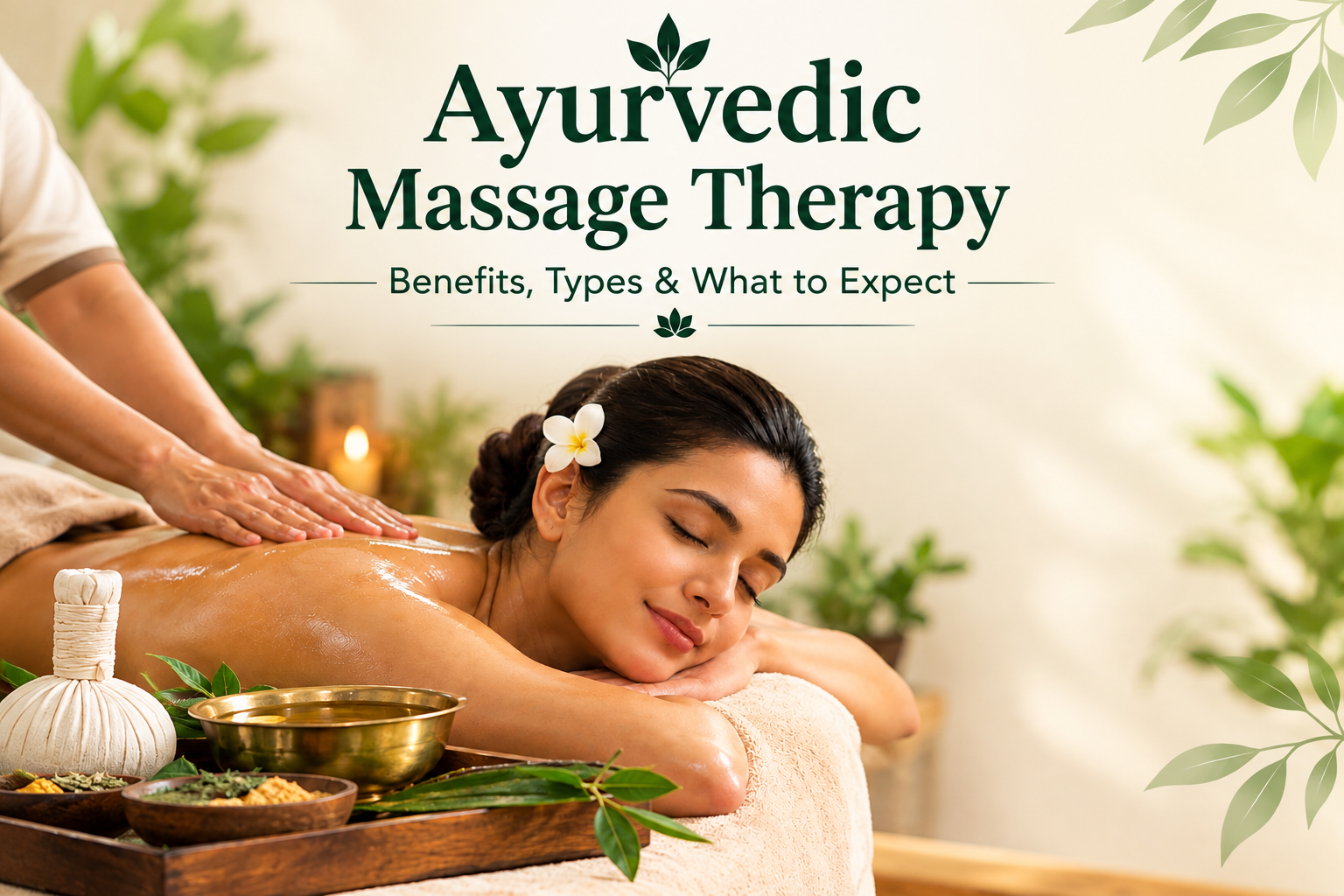
Ayurvedic Massage Therapy: Benefits, Types & What to Expect
What Is Ayurvedic Massage Therapy? & How It Works
Ayurvedic massage therapy is one of the oldest healing traditions in the world, rooted in India's ancient system of Ayurveda — a Sanskrit term combining ayu ("life") and veda ("knowledge"). Unlike a standard relaxation massage, Ayurvedic massage therapy uses warm, herb-infused oils and time-honored strokes aimed at restoring balance in the body rather than just easing sore muscles for an hour.
If you're curious about what this therapy involves, its proven benefits, and the different techniques that fall under it, this guide covers everything you need to know — along with where in Lucknow you can experience it as part of a full spa wellness session.
What Is Ayurvedic Massage Therapy?
Ayurvedic massage therapy is a form of bodywork that blends warm herbal oils with structured strokes, kneading, and pressure applied along the body's energy pathways. The goal isn't purely relaxation — it's to calm the nervous system, improve circulation, and help the body release built-up tension and toxins, working from principles that are thousands of years old.
What separates Ayurvedic massage treatment from a generic massage is the use of oils infused with herbs, and techniques passed down through traditional practice rather than modern spa trends. It's this combination of natural ingredients and time-tested method that gives Ayurvedic massage its distinct, deeply restorative feel.
How Does Ayurvedic Massage Therapy Work?
A typical Ayurvedic massage session centers on a few key elements:
- Warm herbal oil — usually sesame or other herb-infused oils, warmed before application so they absorb more effectively into the skin and muscle tissue.
- Rhythmic, structured strokes — long, flowing movements combined with kneading and pressure, applied by hand (sometimes with the forearms or elbows) across muscles, joints, and connective tissue.
- Pressure-point focus — attention to specific points on the body believed to hold tension or blocked energy, aimed at restoring a sense of balance.
The combination of warmth, oil, and technique is what makes this therapy feel different from a typical Swedish or deep tissue massage — it's slower, more deliberate, and designed to work on both the body and the nervous system at once.
Types of Ayurvedic Body Massage
Ayurveda includes several recognized techniques, each with a slightly different focus. These are some of the most commonly offered forms of Ayurvedic body massage at spas and wellness centres.
Abhyanga (Ayurvedic Full Body Massage)
Abhyanga is the most widely known form of Ayurvedic full body massage. Warm herbal oil is applied generously across the entire body and worked in using long, flowing strokes. It's often the starting point for people new to Ayurvedic massage treatment, prized for improving circulation, nourishing the skin, and calming an overactive mind.
Shirodhara
In this deeply calming therapy, a thin, continuous stream of warm oil is poured over the forehead. Shirodhara is commonly used to ease mental fatigue, anxiety, and sleep troubles, and pairs well with a full-body session for a more complete experience.
Panchakarma
Panchakarma refers to a broader detoxification approach involving multiple therapeutic procedures aimed at cleansing the body and restoring balance. It's a more intensive, multi-step form of Ayurvedic care rather than a single massage session.
Svedana (Herbal Steam Therapy)
Svedana uses herbal steam to induce sweating, which is believed to help detoxify the body, improve circulation, and relieve muscular stiffness. It's often used alongside oil-based massage for a more complete Ayurvedic experience.
Top Ayurvedic Massage Benefits
The benefits of Ayurvedic massage therapy go well beyond a temporary sense of relaxation. Commonly reported Ayurvedic massage benefits include:
- Reduced stress and anxiety — the warm oils and steady strokes help calm an overstimulated nervous system.
- Improved circulation — consistent pressure combined with warm oil supports better blood flow.
- Better sleep quality — therapies like Shirodhara are particularly popular for people dealing with restlessness or poor sleep.
- Relief from muscle stiffness — targeted strokes help ease tension that builds up from daily routines, long work hours, or travel.
- Support for natural detoxification — techniques like Svedana and Panchakarma are traditionally used to help the body release toxins.
- Nourished, healthier-looking skin — herbal oils are chosen partly for their skin-conditioning properties.
- A greater sense of balance — regular sessions are associated with longer-term wellbeing, not just short-term relief.
Ayurvedic Full Body Massage vs. Regular Massage
A common question is how an Ayurvedic full body massage compares to a standard spa massage. Regular massage — like Swedish or deep tissue — typically focuses on muscle relief through consistent pressure techniques. Ayurvedic massage treatment, by contrast, layers in warm herbal oils and traditional strokes aimed at the nervous system and overall balance, not just the muscles. Many people find it feels slower and more holistic, even when the session length is similar.
What Happens During an Ayurvedic Massage Treatment
If you're booking your first session, here's generally what to expect:
- A quick conversation with your therapist about any areas of tension or concerns you'd like addressed.
- Oil application — warm herbal oil is used across the body, or focused on specific areas depending on the technique.
- The massage itself — typically 45–90 minutes, combining long strokes, kneading, and pressure-point work.
- A short rest period afterward, allowing the oils to settle and the body to relax fully.
- Aftercare — most therapists suggest staying hydrated and avoiding a heavy meal immediately after.
How to Choose the Best Ayurvedic Massage
With multiple techniques and providers to choose from, a few things make a real difference in finding the best Ayurvedic massage:
- Trained therapists — Ayurvedic massage is technique-driven, so experience matters more than it might for a simple relaxation rub.
- Quality of oils used — genuine herbal oils, rather than generic massage oil, are central to getting the intended benefits.
- A clean, private setting — hygiene and a calm environment noticeably affect how restorative the session feels.
- A spa that treats it as a real specialty, not an afterthought on a long menu — ask what specific Ayurvedic techniques (like Abhyanga or Shirodhara) they actually offer.
Who Should Try Ayurvedic Massage Therapy?
Ayurvedic massage therapy suits most people dealing with everyday stress, muscular tension, fatigue, or restless sleep, and it's a good option for anyone who prefers a more traditional, natural approach to relaxation. That said, if you're pregnant, recovering from a recent injury, or managing a medical condition, it's worth checking with a doctor and informing your therapist beforehand, since oils and pressure may need to be adjusted.
Experience Ayurvedic Massage Therapy in Lucknow
Reading about the benefits is one thing — experiencing it is another. If you're in Lucknow and want to try it for yourself, Swan Spa in Gomti Nagar includes Ayurvedic massage as one of its core wellness therapies, alongside Swedish, Thai, Balinese, and deep tissue massage — so you can choose the treatment that actually fits what your body needs that day.
At Swan Spa, Ayurvedic sessions are performed by trained therapists using warm herbal oils in a clean, private treatment cabin — the kind of setting that makes a real difference to how effective the therapy feels. If you'd like to see exactly what's included, you can check the details of Swan Spa's Ayurvedic massage service in Lucknow. If you're not sure which therapy is right for you, many first-timers simply contact the Swan Spa team to ask what they'd recommend before booking.